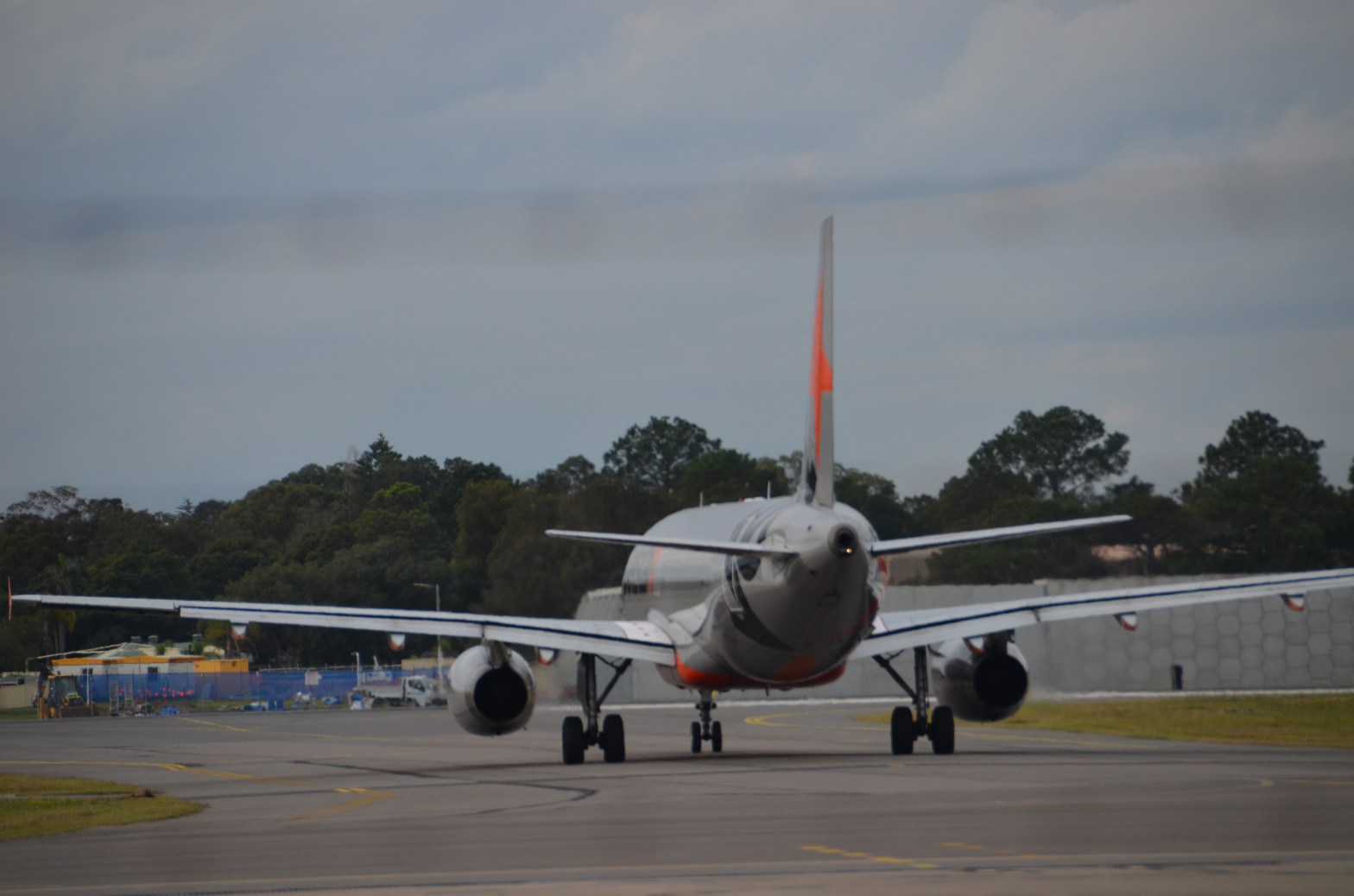
Flygskam is the Swedish movement spreading across Europe which translates to ‘flight shame’.
In light of the carbon emissions emergency and the limited time period to combat it, announced by the UN, Europeans have come to encouraging people to boycott flying to lower emissions. We Stay on the Ground has a campaign aiming to get 100,000 people to commit to a Flight Free 2020. These environmental pressures have become the basis of a multi-country flygskam.
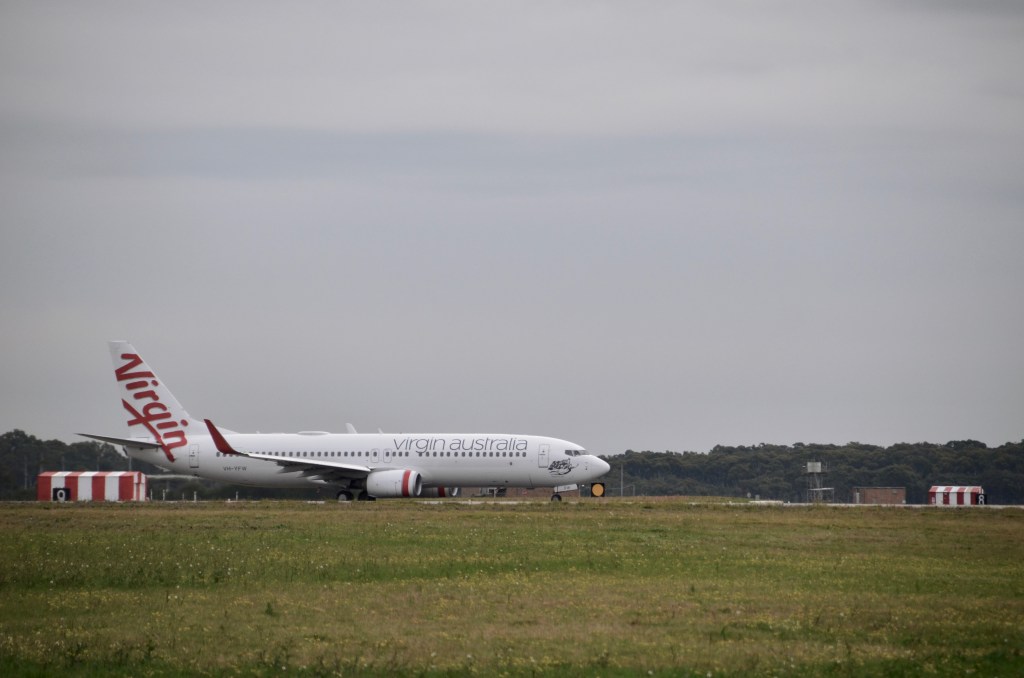
Engagement manager, Ms. Kerri Major, working in WWF’s partnership and innovation says that from an environmental point of view, this is what the world needs. “Global aviation emissions are growing faster than ever, we have nearly doubled the number of passengers between 2015 and now,” she said.
“So what the aviation sector needs to do, and they account for 5% of the world’s global emissions, is to get its act together and adopt a sustainability program and adopt a rigid and well enforced policy so we actually reduce its carbon emission in the sector as quickly as possible because the UN says we have about 12 years.”
The ICAO is a UN body dedicated to international discussion on aviation, including environmental practices. Their website allows for fliers to calculate the carbon emissions of their flight.
“The UN says we all have a budget of around 2000kgs. So, one return flight, Sydney to Melbourne, is already 140kgs and that’s just a domestic flight. Fly overseas anywhere, because Australia is so far from anywhere, you are just going to blow the budget straight away,” Ms Major said.
But this movement may not be able to have the far-reaching effects it hopes to when talking about large, dispersed countries like Australia.
Australia’s population density stood at 3.1 people per square kilometer in June 2016, according to the ABS in June 2016, much smaller than Europe’s 33.57 people. This distance, and low amount of demand for travel, means aeroplanes are heavily relied on for transport between major cities and internationally.
“From a consumer perspective… living in Australia, for a lot of Australians, it is kind of hard because there is no viable alternative right now,” Ms. Major said.
So what’s the problem?
Countries throughout Europe and Asia have made the move towards high-speed trains to link major cities that would otherwise have high air traffic. Australia, however, still does not have a single one.
Emeritus Professor Jason Middleton from the School of Aviation at UNSW says that there is no practical reason to implement these trains in Australia because we have too much distance and too little people.
“In lots of country Australia, up in the territories, communities in the Northern Territory are serviced by small aeroplanes that fly people in and out in the wet season because even the roads are impassible to 4WDs,” he said,
“Under those circumstance, flying becomes the only viable way to get from A to B.”
“Of course, you need aeroplanes internationally, because Indonesia has 17000 islands. There’s not enough boats and the only way to get around Indonesia is by aeroplane so the geography also plays a role.”
Due to our relatively secluded place in the world, flight has opened access to international markets. Mr Middleton uses the example of Tasmanian abalone and crayfish. As volatile perishables, planes are used to transport the live seafood to Asia, opening business opportunities to Australians.
Australia has been looking into a high-speed train between Sydney and Melbourne, but infrastructure and cost have become major roadblocks. High-speed trains traveling at 300km/hr cannot use the same railway lines as the current slower trains. This means any railway beds would need to be reseated which starts becoming very expensive when covering such large distances. Mr. Middleton says the payback period starts to be closer to 30 to 40 years if train fares are to be competitive with airfares.
Damien Johnson, an engineer with the health food company Sanitarium, says he spent 80% of his working weeks last year flying between Sydney and Brisbane, and has flown up at least once a month this year.
“We do a lot of board meetings and things where you think up over Skype… but you can’t always do all of your business in that format. Sometimes you actually need to be there to check things, to get measurements, to look thing over. I think we can use technology as much as we can but there’s always going to be a need for people to be moving around,” he said.
“A lot of things are made outside of Australia. There is always going to be that necessity for people to fly being that we are sort of on our own on an island.”
On a holiday in China, Mr. Johnson found that the Chinese infrastructure in place often makes high speed trains more affordable, just as efficient and more appealing than flying. He said that plans for Chinese infrastructure continue to expand with aims over the next ten years to link up with Europe’s train system, connecting much of the Eurasian continent.
Professor Jason Middleton said “It is actually cheaper to build runways than it is to build railway lines.”
“When you are looking at environmental change, aviation is not the low hanging fruit where you make aviation more efficient and you solve the whole pollution problem. You could make aviation twice as efficient and it still is only contributing a small amount of CO2 into atmosphere,” he said.
So then what?
While flygskam may not be taking off in Australia, the UN still calls for fast and drastic measures against carbon emissions.
According to WWF’s Kerri Major, the difference is in the small actions of individual people with the help of the aviation industry to give people those options.
“It is a necessary evil if you are like me and have family elsewhere. You have got people who live in regions and they have just got no other way they can get anywhere. So we really need the industry to step up and we need people do to their bit,” she said.
“Personally, I’m the person that clicks on all the carbon offsetting options. I pay $20 more a flight, or $50 or whatever it is. A small price to pay for, at least I’m making sure that some part or even all of my flight is offset.”
“If you’ve got the time and you’ve got the privilege and the luxury of time, take the train, it can be quite fun. Catch a slow train, there is a slow train movement and you get to see parts of Australia you’ve never seen before.”
With the plan set out by the ICAO, the aviation industry has been using innovation to remain a popular source of transportation but also to respond to the call on aviation to reduce emissions.
Aviation expert Jason Middleton says that work is being done to reach these goals, but progress is slow and there is a lot more work to do before a noticeable difference is made. He says manufacturers are getting more efficient and the engines are getting more efficient, but fuel is still the main energy source.
“Small electric aeroplanes have been used or tried out for training for short one hour flights but even then the problem is that the battery costs and battery recharge actually add significantly to the capital costs,” he said.
“Even with electric you have to charge it. Base load electricity at the moment, a lot of it comes from coal fire powered power stations. The electric motor is much cleaner by itself but producing the electricity to the electric motor, the full cycle of producing energy and electricity through coal. I’m not sure that that’s necessarily much better than using petrol or natural gas.”
Damien Johnson, in his own research, found that others are working on a maglev train which runs in a vacuum. “It’s quite interesting to see that some people out there are trying to push the boundaries of ground travel.”
While the manufacturers and engineers continue to work towards the international goals, Kerrie Major says flygskam is not the way to create change within society and shaming people is not creating the desired outcome.
“It’s about inspiring people to take action… In the long run what you want to do is give people drive, you want to give people drive to make the change.”
 Jacinta Franks Digging Deeper